
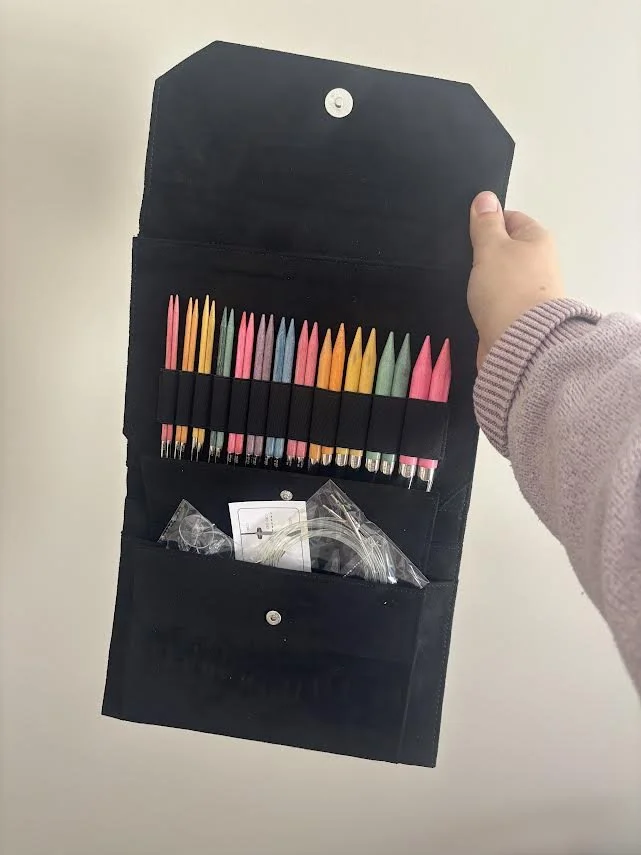
Not sure which knitting needles to use? Here's a look at the different types of knitting needles, how materials affect your knitting, and a few of my personal favorites.
I've been knitting for years, and at this point, I've tried just about every major knitting needle brand. I definitely have my favorites, but one thing I've learned is that there really isn't one perfect knitting needle for everyone.
Some knitters love the speed of metal needles, while others prefer the feel of wood. Some use circular needles for everything, and others wouldn't dream of knitting socks without double-pointed needles.
A lot of it comes down to personal preference, but your project, yarn, and knitting style can also make a difference.
Let's look at the options and why you might choose one over another.
Types of Knitting Needles
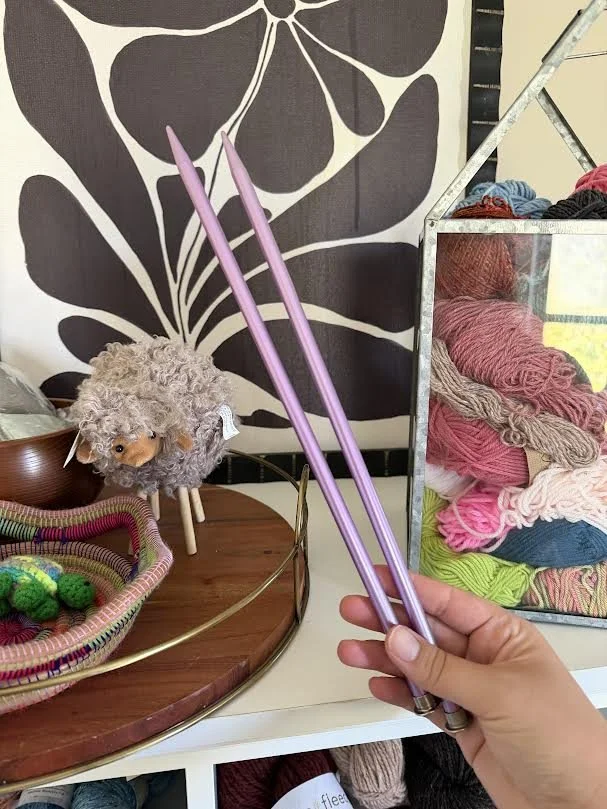
Straight Knitting Needles
Straight needles are probably what most people picture when they think about knitting. They have a pointed end and a stopper on the opposite end to keep stitches from sliding off.
They're typically used for knitting flat pieces, like scarves, dishcloths, or individual sweater panels.
While they're great for learning, I personally don't reach for straight needles very often. I prefer circular needles because they're more versatile and can hold larger projects comfortably.
Circular Knitting Needles
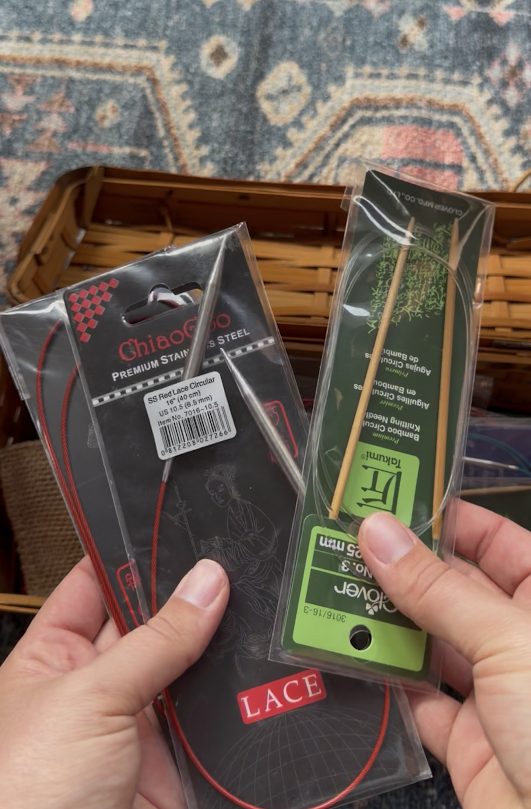
Circular needles have two needle tips connected by a flexible cord. You can use them to knit both flat and in the round, making them useful for everything from shawls and sweaters to hats and blankets.
There are two main types:
Fixed circular needles: The tips and cord are permanently attached.
Interchangeable circular needles: The tips can be removed and attached to different cord lengths.
I use interchangeable needles for most of my knitting. Having multiple needle sizes and cord lengths available makes it much easier to move between projects without buying a new circular needle every time.
Double-Pointed Needles (DPNs)
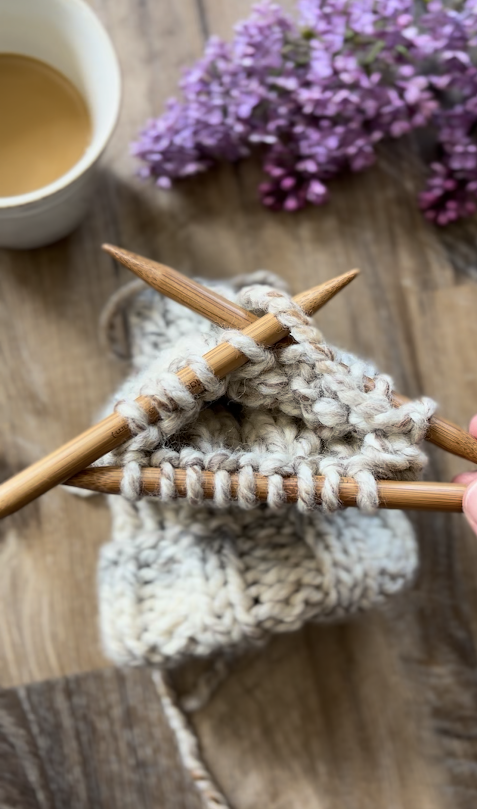
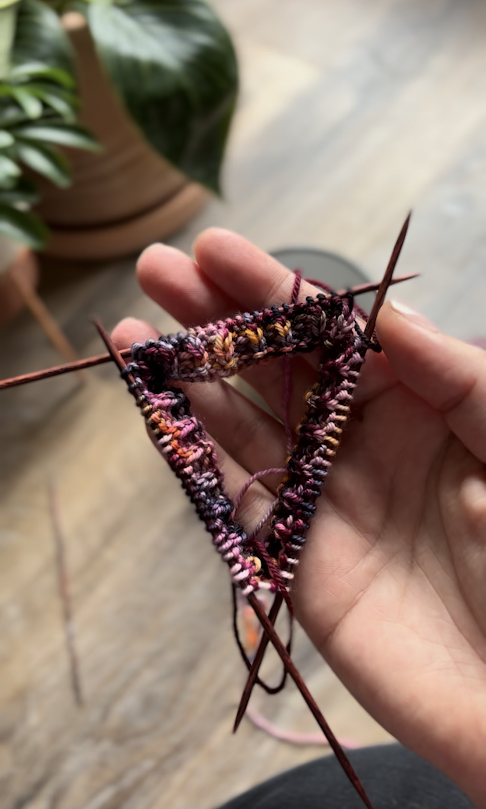
Double-pointed needles have points on both ends and usually come in sets of four or five.
They're especially useful for knitting smaller circumferences, including socks, mittens, sleeves, and the tops of hats.
I actually prefer DPNs for most of my sock knitting and many smaller projects in the round. I know some knitters find them a little intimidating at first, but once you get comfortable with them, they're really practical.
When I don't have the right DPN size available, I'll usually switch to magic loop.
Short Circular Knitting Needles (Shorties)
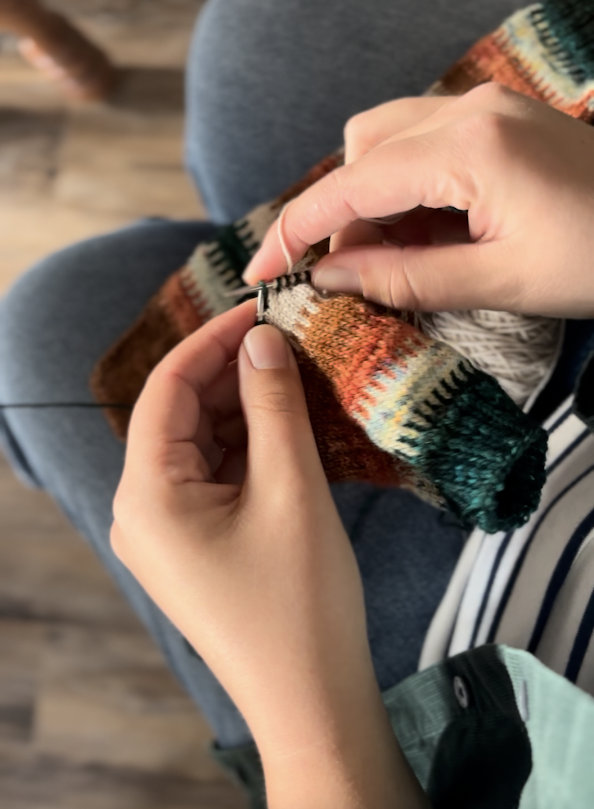
Short circular needles, often called shorties, have shorter tips and cords that make them useful for knitting small circumferences, like socks, sleeves, and mittens. They're a great alternative to DPNs or magic loop because you can knit continuously in the round without switching between needles or pulling a cord through your stitches. Some knitters love how convenient they are, while others find the shorter tips uncomfortable to hold. Like most knitting needles, it really comes down to personal preference!
What About Magic Loop?
Magic loop isn't a separate type of knitting needle. It's a technique that allows you to knit smaller circumferences using one long circular needle.
You pull sections of the cord out between your stitches, allowing you to work around a smaller project.
I use magic loop quite a bit for sleeves and other projects in the round, especially when I'm already using my interchangeable set. It's convenient because I can change my needle tips and cords without needing a completely different set of needles.
Neither DPNs nor magic loop is necessarily better. They're simply two different ways to accomplish the same thing.
Wood vs. Metal vs. Aluminum Knitting Needles
The material of your knitting needles can change how they feel in your hands and how easily your stitches move.
Wooden Knitting Needles
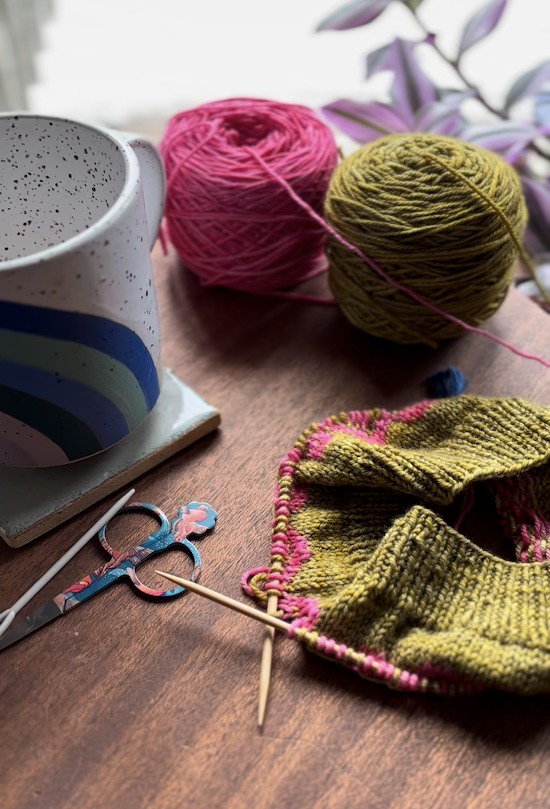
Wooden needles tend to have a little more grip than metal needles, which can help prevent stitches from sliding off unexpectedly.
They also feel warmer in your hands and are often a favorite among knitters who prefer a little more control.
Wood can be especially helpful when working with slippery yarns or learning a new technique.
The downside? Some wooden needles aren't quite as fast as metal, and thinner wooden tips can be more vulnerable to breaking.
Metal Knitting Needles
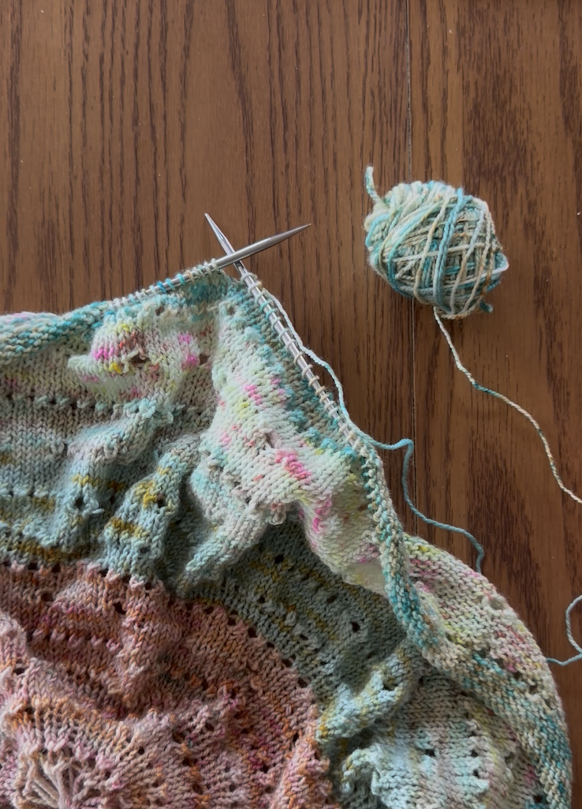
Metal needles, particularly stainless steel, generally have a smoother, slicker surface.
This allows stitches to move quickly, which is something many experienced knitters appreciate.
I think metal needles are especially useful for projects with lots of stitches, lace knitting, or yarns that tend to grip the needles.
However, that slick surface isn't everyone's favorite. If your stitches already have a tendency to slip off, metal needles might take some getting used to.
Aluminum Knitting Needles
Aluminum is technically a metal, but it's worth mentioning separately because aluminum knitting needles can feel different from stainless steel.
They're generally lightweight and come in a variety of finishes and colors.
Depending on the finish, aluminum needles can provide a slightly different balance of grip and glide. They're a nice option for knitters who want metal needles without necessarily choosing stainless steel.
It's also worth remembering that two needles made from the same material can feel completely different depending on their finish, tip shape, and construction.
Popular Knitting Needle Brands Worth Knowing
There are quite a few knitting needle brands available, and each offers something a little different.
Here are several worth looking at if you're exploring your options.
ChiaoGoo: Particularly well known for stainless steel circular needles, precise tips, and flexible cables. A popular option for knitters who enjoy metal needles.
KnitPro (formerly Knitter's Pride in the U.S.): Offers a wide range of wooden and metal needles, including interchangeable sets and DPNs. Their variety makes it easy to find different materials and styles.
LYKKE Crafts: Known for beautiful wooden knitting needles in several finishes and colors. They're a good option if you enjoy the feel of wood.
Lantern Moon: Offers polished ebony wooden needles and interchangeable sets. A lovely option for knitters looking for a smooth wooden needle with a more traditional feel.
Knit Picks: Offers wooden and metal needle options, including colorful interchangeable sets. Worth considering if you're comparing different materials and price points.
These brands are available through Jimmy Beans Wool, although individual styles and sizes may vary.
My Favorite Knitting Needle Sets
After trying so many different brands and materials, there are two interchangeable sets I find myself reaching for most often.
KnitPro Mindful Affection Interchangeable Needle Set
This is one of my personal favorites.
The KnitPro Mindful Affection set has stainless steel tips and interchangeable cords, making it a versatile option for a wide range of knitting projects.
I appreciate having multiple sizes and cord lengths available, especially since I usually have several projects going at once.
It's a set I can use for sweaters, shawls, and smaller projects when I'm working with magic loop.
LYKKE Colour Wooden Interchangeable Needle Set
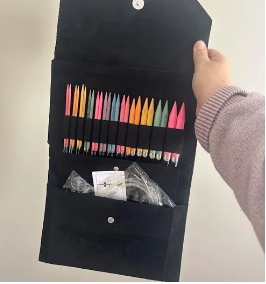
My other favorite is my colorful wooden interchangeable set from LYKKE.
These are birchwood needles, so they offer a different feel from my stainless steel KnitPro needles.
I like having both materials available because sometimes I prefer a little more grip, and other times I want my stitches to move more freely.
And, of course, the colorful needles are fun to use!
Shop my LYKKE Colour interchangeable set
How Do You Choose the Right Knitting Needles?
If you're newer to knitting, I wouldn't rush into buying an expensive interchangeable set right away.
Start with a pair of needles in the size your project requires. Try wood, try metal, and pay attention to how each feels.
A few things to consider:
Your yarn: Slippery yarn might be easier to control on wooden needles, while grippier yarn may move more comfortably on metal.
Your project: Socks, sweaters, shawls, and blankets can all benefit from different needle styles or cord lengths.
Your knitting tension: If you knit tightly, smoother needles may help your stitches move more easily.
Your comfort: Needle weight, tip length, and even the shape of the tips can affect how comfortable they feel during longer knitting sessions.
Your preferences: Some knitters simply enjoy one material more than another, and that's a perfectly good reason to choose it.
Also, remember that the needle size recommended in a pattern is a starting point. Your gauge determines whether you're getting the fabric and measurements you need.
Where I Buy My Knitting Needles
I buy most of my knitting needles from Jimmy Beans Wool. They carry a wide selection of brands, interchangeable sets, individual needles, and accessories.
If you're interested in trying a new brand or comparing different needle materials, it's a good place to browse.
Shop knitting needles at Jimmy Beans Wool
Affiliate disclosure: This post contains affiliate links. If you purchase through my links, I may earn a small commission at no additional cost to you. I only share products I personally use or believe may be helpful.
A Final Thought
After trying so many different knitting needles, I've realized that my favorite isn't always the best choice for every project.
I love my KnitPro and LYKKE interchangeable sets, but I still regularly use DPNs. Sometimes I prefer wood, and sometimes I prefer metal.
You don't need to own every type of knitting needle to enjoy knitting, either. It's more about figuring out what works for you and the projects you like to make.
And that preference might change as you gain experience, try new techniques, or start working with different yarns.
I'd love to know: Are you a wooden needle knitter, a metal needle knitter, or do you use both?