
Written by:
Helaina Hovitz Regal - The Impact Edit
May 06, 2026

For Molly Grimm, knitting has become something far greater than just a creative outlet.
What she offers to her audience is a unique approach to a grounding practice that has quietly helped many people navigate some of the most difficult moments of their lives.
What began as a simple way to connect with others by teaching small knitting classes in local coffee shops has since grown into Wool & Cottage and social media platform called Knitting Wellness, which is centered on the intersection of creativity and mental health.
Some of the most impactful messages she has received have come from individuals going through cancer treatment, grief, or anxiety, who shared that her approach to knitting gave them something tangible to hold onto when everything else felt uncertain.
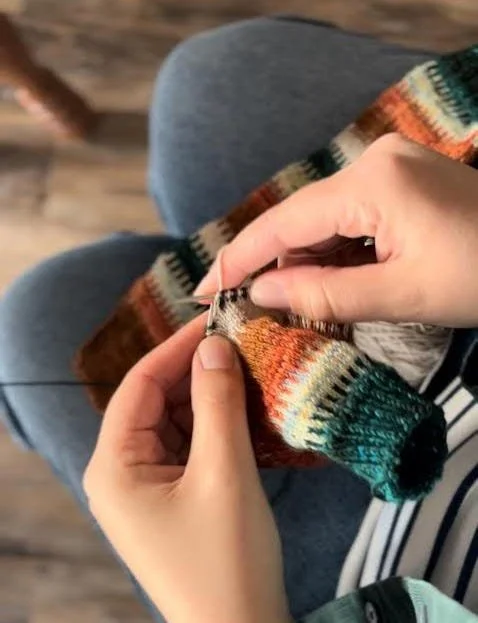
Grimm’s work is deeply shaped by her own experiences. After the birth of her daughters, Grimm faced significant mental health challenges, including postpartum depression, which led her to step away from teaching for a period of time. When she returned, it was with a renewed sense of purpose: to introduce knitting not just as a hobby, but as a tool to calm the mind, support anxiety, and ease depression.
“Sometimes I create a post out of something I’m personally going through at the moment, or something I’ve just come out the other side of,” she said, “with the intention of helping the next person feel a little less alone in it.”
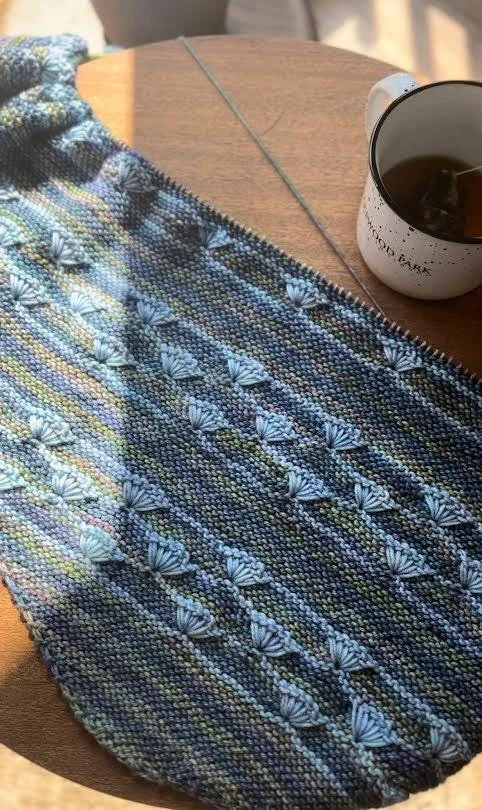
That intention has resonated with occupational therapists, art therapists, social workers, and others in related fields who have referenced her content in their own work or begun incorporating knitting into their sessions with patients and clients.
“There’s something powerful about being able to see progress,” she said. “You can physically see your work growing, even when other parts of life feel slow or uncertain.”
Knitting teaches mindfulness skills and life lessons such as patience, learning how to work through mistakes, following through on something, and the sense of accomplishment that comes with finishing. Ultimately, there is a great deal of beauty in knitting, beyond just colors and patterns. It also creates space for conversation, for sharing both hardships and joy, and for feeling less alone.
That notion led her to teach in halfway houses, working with women rebuilding their lives after coming out of jail programs.
“One of the most meaningful things to witness was how many of them began replacing harmful habits with knitting. It even helped reduce the desire to return to substances because they were so engaged in what they were creating.”
When people first learn to knit, the calming side of knitting is not always immediate, but it is something that grows over time, and it doesn’t take long to get the hang of.
“When knitting is used more intentionally as a tool, often paired with therapy techniques that help bring the mind to the present, like breathwork, gratitude, or counting stitches. It can also help interrupt overthinking,” she said.
“Just having something physical to concentrate on gives the mind somewhere to go, instead of staying stuck in the same thought patterns.”
She is always careful to say that knitting isn’t a replacement for professional care, but it can be a supportive piece alongside it.
“The key is giving yourself permission to go slowly and focusing less on the outcome and more on the experience. Over time, it evolves into having something familiar to return to that slows you down.”
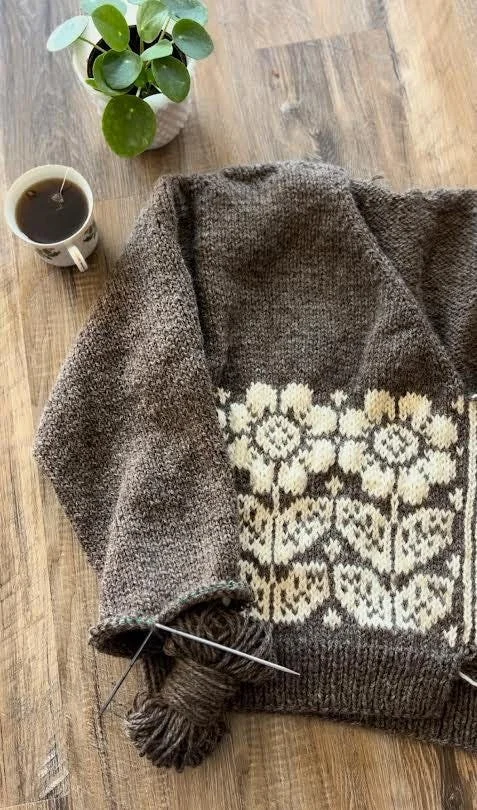
We know for a fact that knitting can help activate the body’s relaxation response through the parasympathetic nervous system, which supports a calmer state and helps reduce stress. Some people even notice things like a lower heart rate. Additionally, one of the lesser-discussed benefits she has noticed is how knitting helps with decision fatigue.
When someone is following a pattern, many of the decisions are already made, especially helpful for those making choices all day.
Repetition is another key element. It gives the mind something predictable to return to, and that predictability can feel grounding.
“The repetitive motion can also lead to a flow state, that feeling where someone is fully absorbed in what they’re doing and loses track of time. That has been linked to improved mood and lower stress.”
Research suggests that learning and practicing knitting can strengthen neural pathways, supporting memory and overall brain health. Some studies even indicate it may help reduce the risk of cognitive decline over time.
“When I first started looking into the research, a lot of it was actually pretty old. Some of it didn’t hold up, and the way people talk about the brain has changed,” she said. “But more is coming out now, especially around flow and creative work. The research is helpful, but there is also something very real about the lived experience of it.”
Her work has extended into the community in other meaningful ways. She has taught children in schools—as young as pre-K—how to knit pieces that contributed to a yarn event where the entire town was decorated in knit and crochet fabric.
“The community, both in person and online, is a special part of it all,” she said. “It’s worth putting in the time. Even five minutes a day adds up.”
Supporting research includes findings from Harvard Health Publishing on the relaxation response and repetitive activities, the Mayo Clinic on stress reduction and parasympathetic activation, the British Journal of Occupational Therapy on improved mood and well-being, and the American Psychological Association on flow state and mental health.