
Knitting is calming. It supports the nervous system. It gives our hands something steady to do when life feels loud.
But knitting is also repetitive.
Even mindful knitting asks a lot from your hands, wrists, and forearms. If we want this hobby to last for years — maybe decades — we have to care for the hands that make it possible.
These are the gentle hand stretches I use to support knitting injury prevention and reduce hand fatigue. They’re simple, accessible, and designed to keep your stitching practice sustainable.
You can do them before you knit, during breaks, or after a long session.
Why Hand Care Matters for Knitters
Repetitive motions — even relaxing ones — can create tension over time.
Adding a short hand stretch routine to your knitting practice can help:
* Reduce stiffness and fatigue
* Support wrist mobility
* Improve circulation
* Encourage ergonomic knitting habits
* Protect your ability to knit long-term
Taking care of your hands isn’t dramatic. It’s responsible. And it’s part of knitting for mental health in a sustainable way.
The Hand Stretches
Move slowly. Nothing should feel forced or painful. These are gentle mobility movements — not aggressive stretches.
1. Wrist Circles
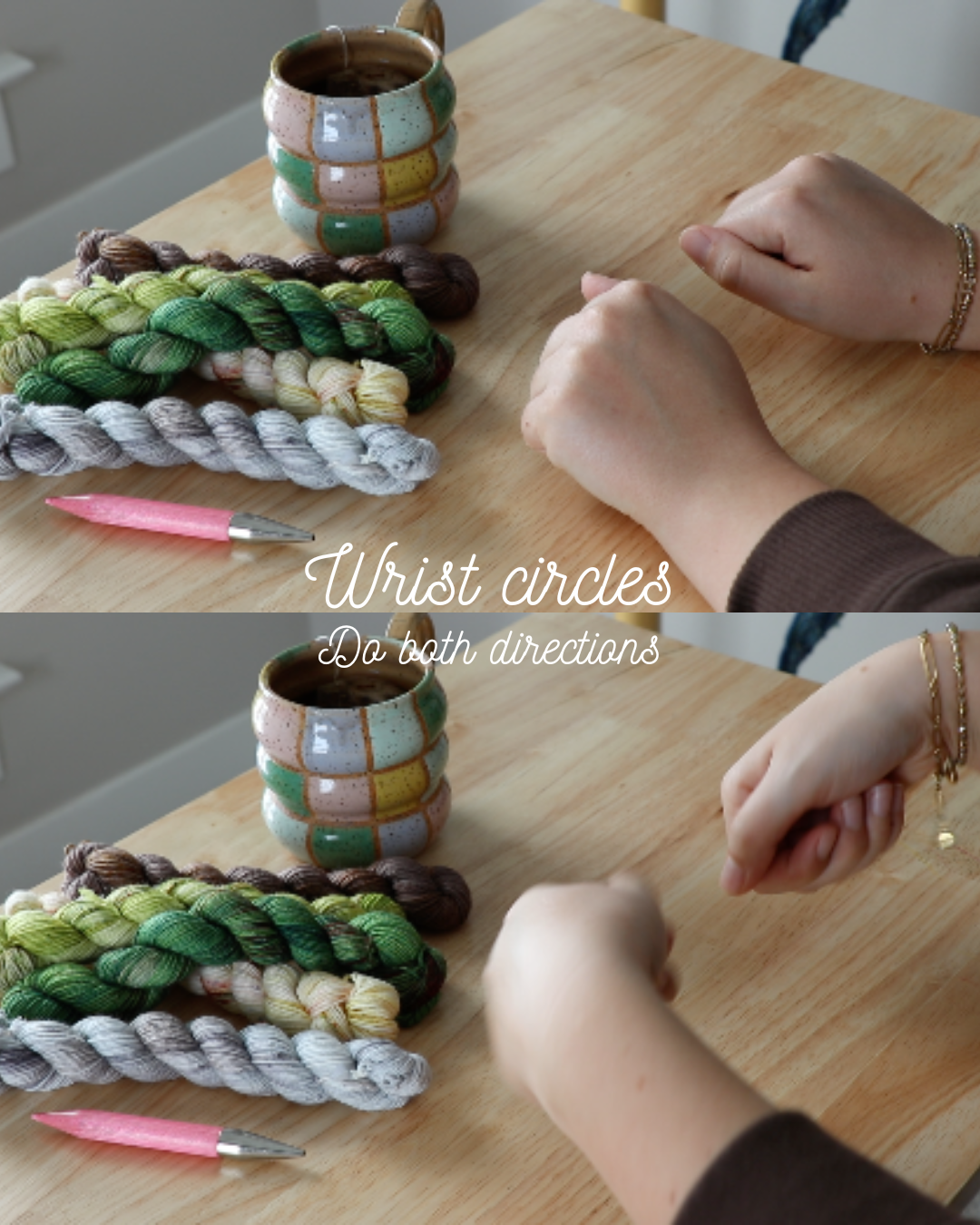
Hold your hands out and slowly rotate your wrists in controlled circles. Go one direction for several rounds, then switch.
This helps warm up the joints and improve circulation before repetitive stitching.
2. Clench & Release
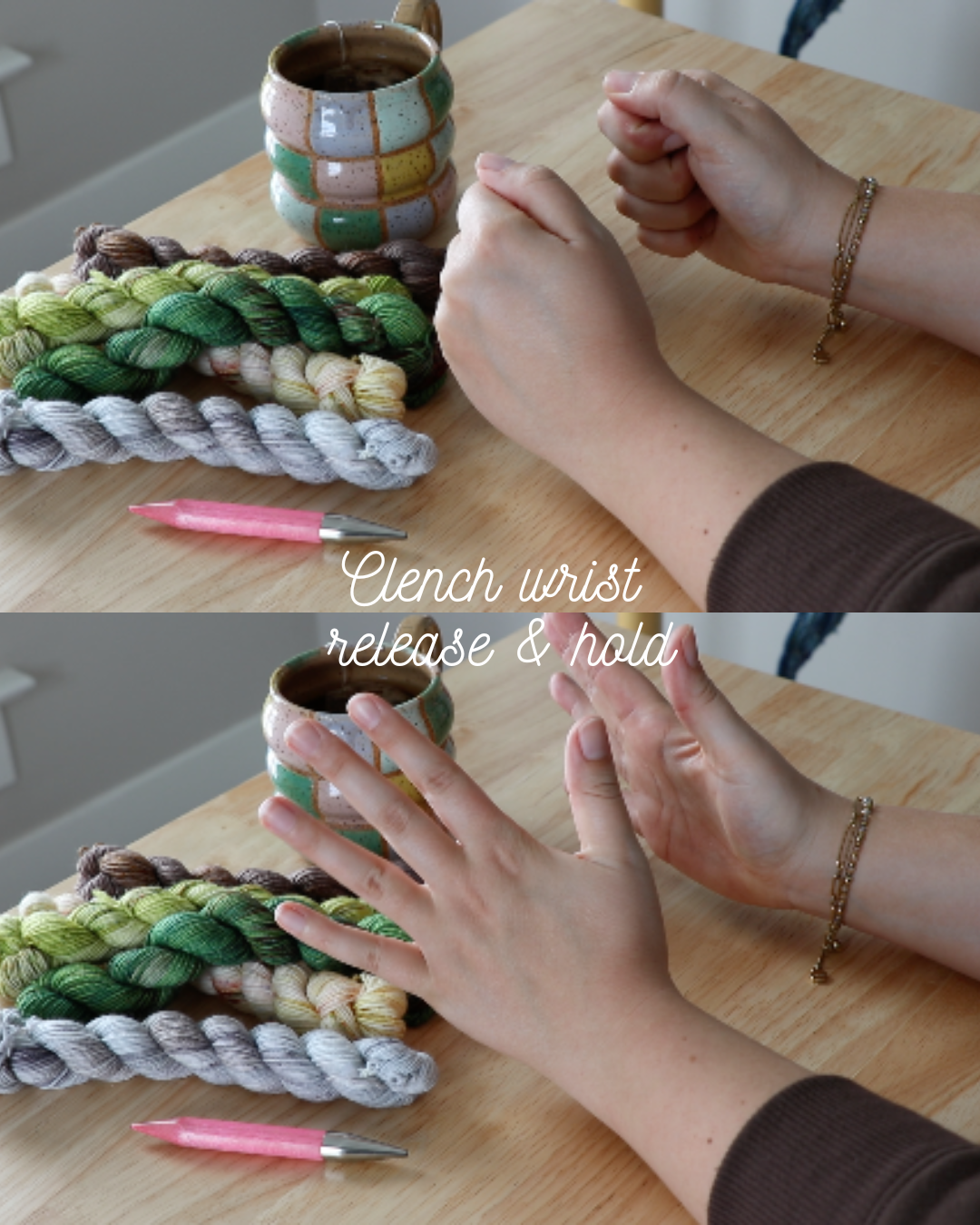
Make a soft fist. Then slowly open your hand and stretch your fingers wide.
Repeat several times.
Most of us hold more tension while knitting than we realize. This helps reset that grip.
3. Thumb Stretch
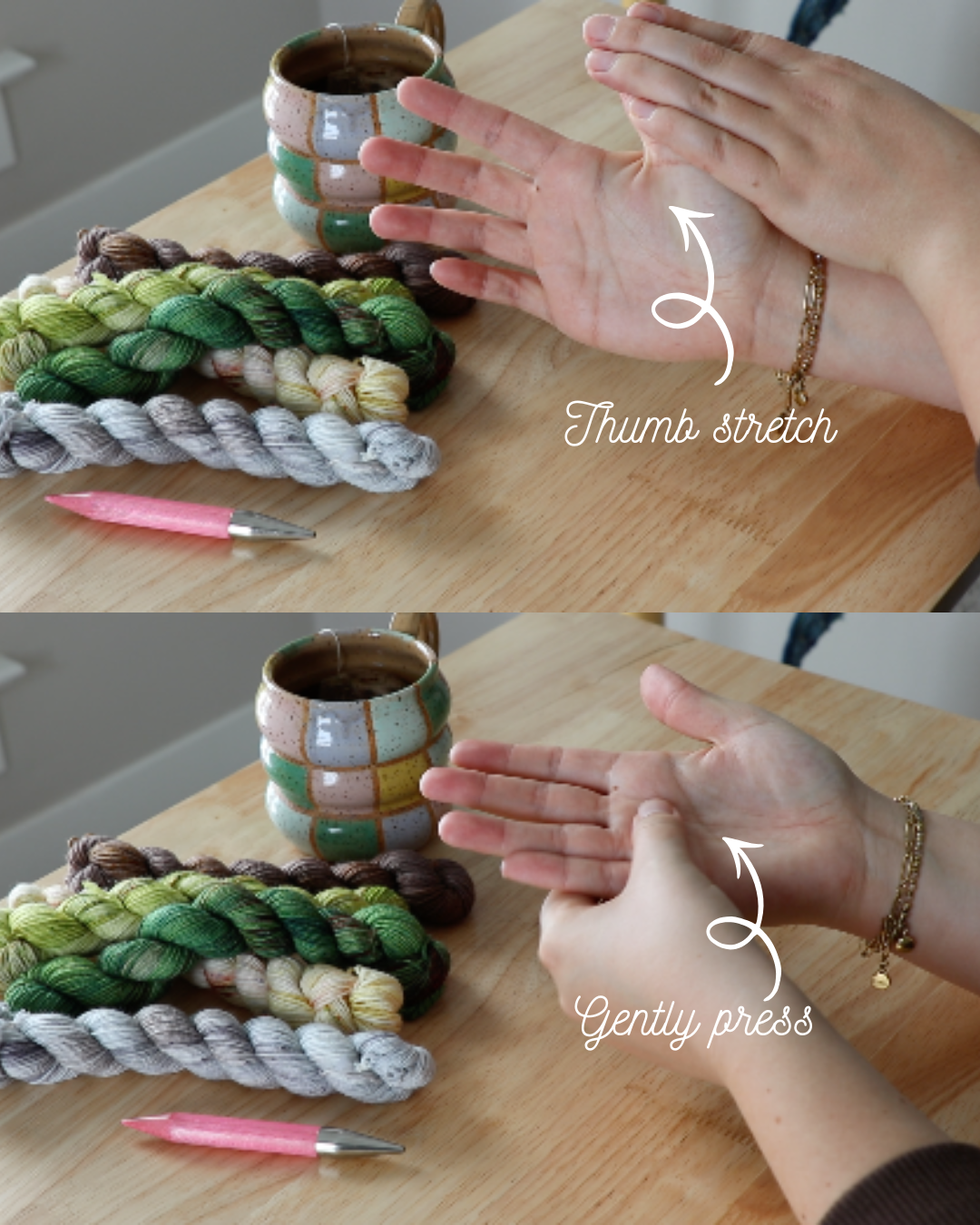
Gently extend one thumb outward and support it lightly with your opposite hand.
Your thumbs work hard while knitting and crocheting. Supporting their range of motion is important for long-term comfort.
Gently massage each finger and and palm.
4. Scraping
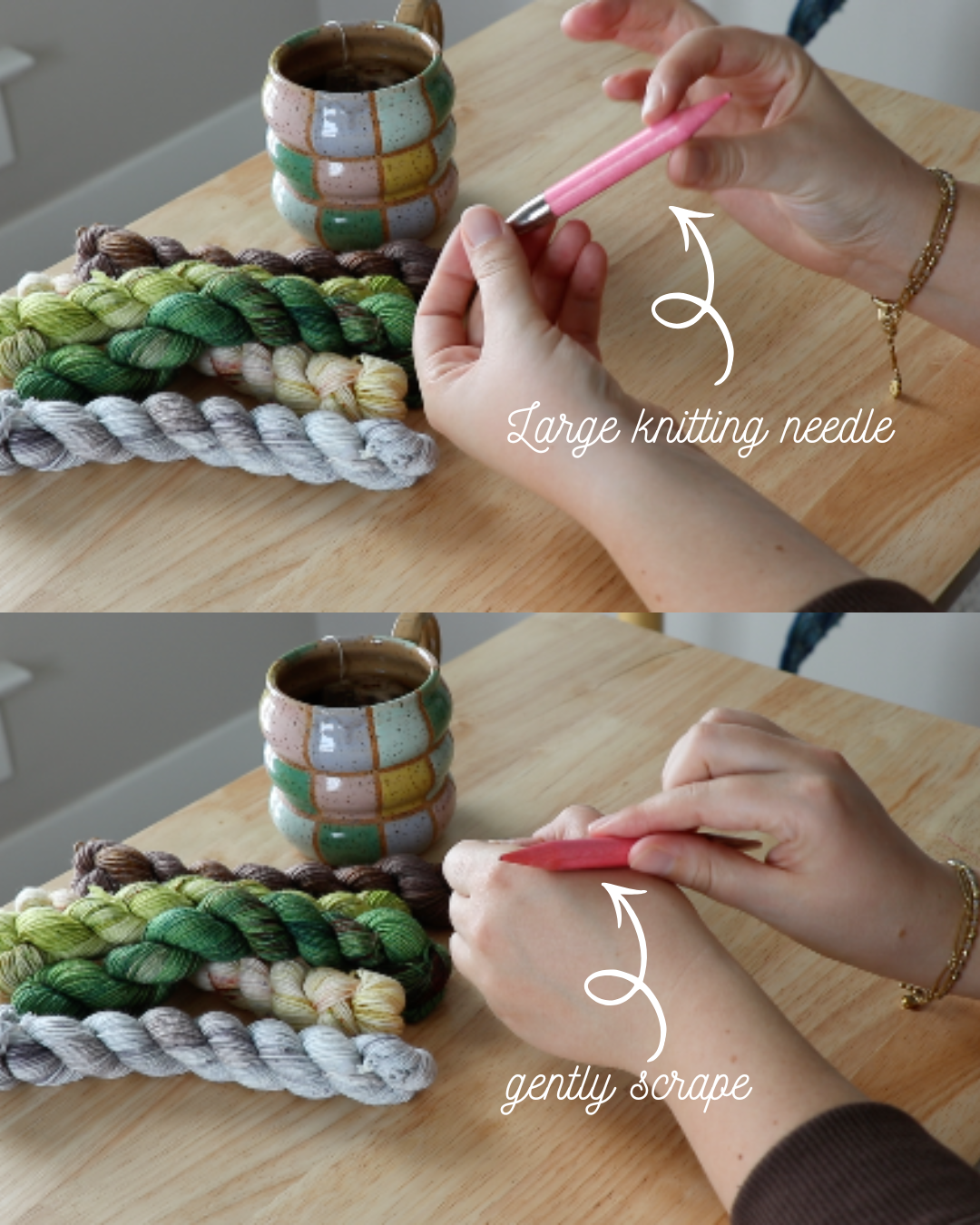
Gently rub or “scrape” to massage and break up any tension, and improve mobility. Ideally you’d want to use stainless steal, or an actual scraping tool for this. If you don’t have one, you can use a larger knitting needle.
Gently rub the area between thumb and first finger. Do not press that hard, this should not feel painful.
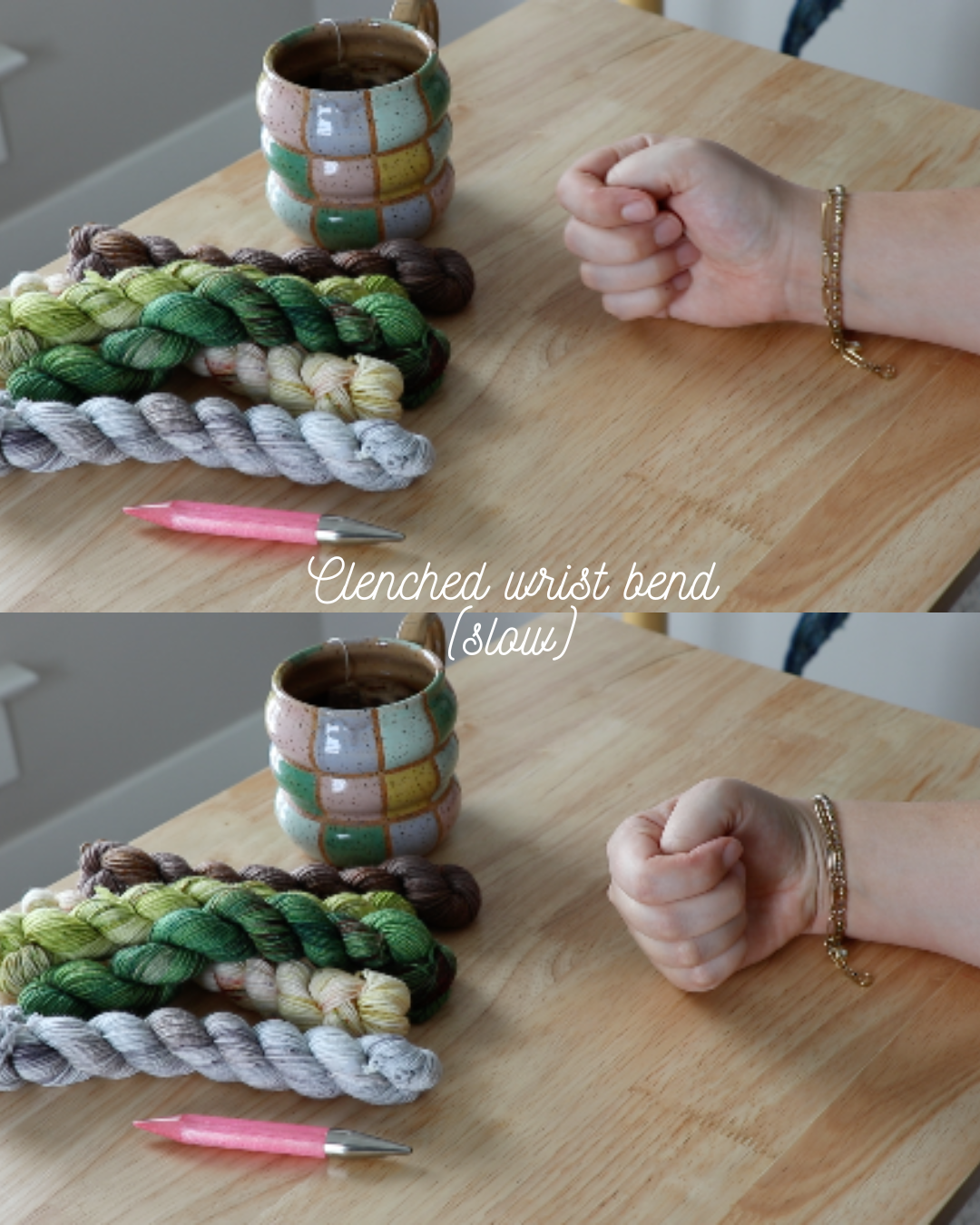
5. Clenched wrist bend
With your arm straight and hand clenched, slowly bend your wrist inward. Return is back to center slowly. Repeat for both hands.
This promotes circulation and awareness without overloading the muscles.
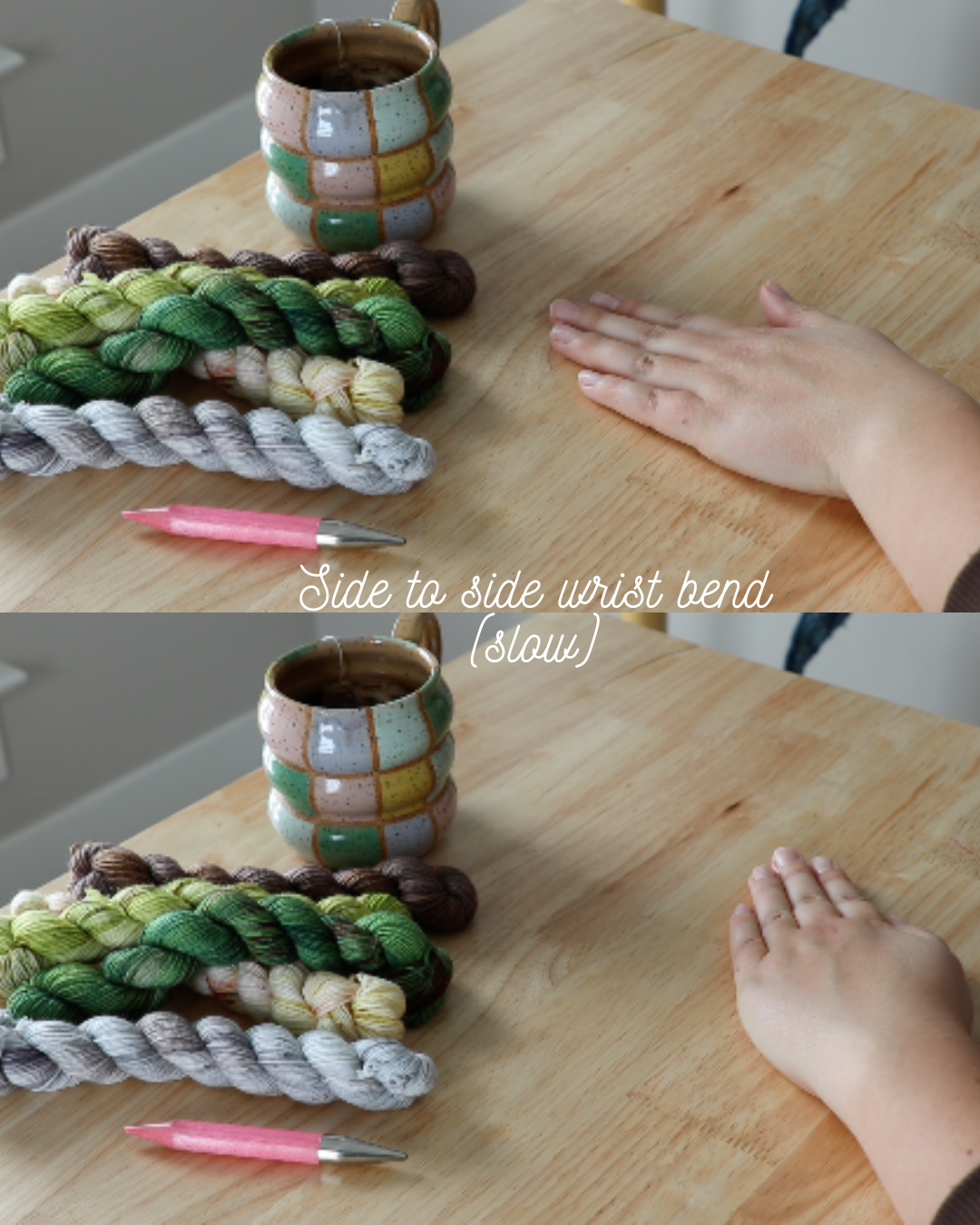
6. Palm-Down, side to side Wrist Bend
Extend your arm with your palm facing down. Gently guide your hand downward with the opposite hand until you feel a light stretch.
Keep it slow and controlled.
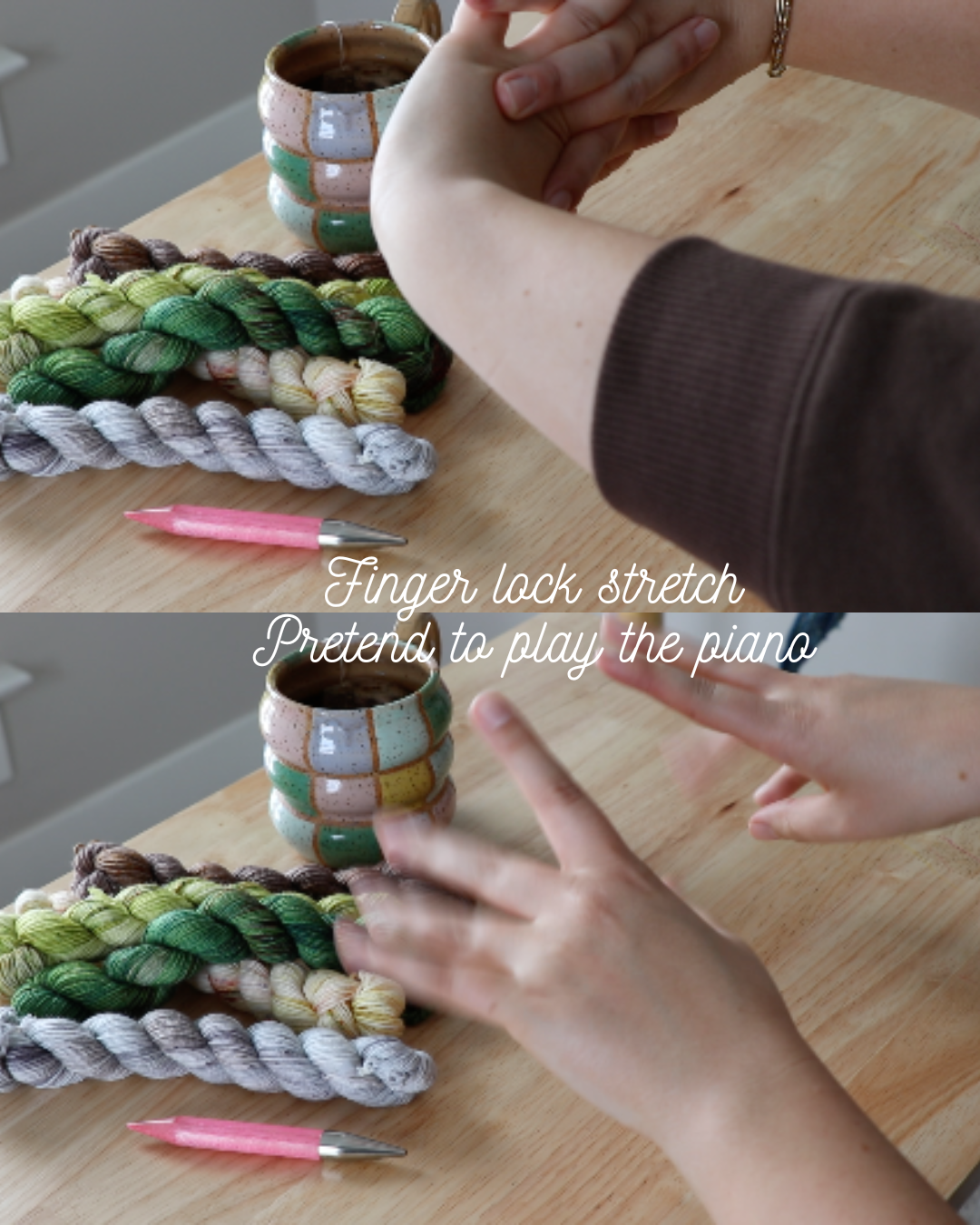
7. Finger Interlace Stretch & Play the piano
Interlace your fingers and extend your arms outward. Gently stretch forward.
Pretend to play the piano and wiggle your fingers.
This helps open the small muscles between the fingers that can tighten during repetitive crafts.
When to Stop Knitting Instead of Stretching
There’s a difference between mild fatigue and pain.
Some light stiffness that improves with rest can be normal.
But if you experience:
* Sharp or stabbing pain
* Tingling or numbness
* Burning sensations
* Pain that lasts into the next day
* Weakness or difficulty holding needles
Stop stitching and seek care from a healthcare professional right away.
I am not a doctor. This is simply the hand stretch routine I use to support my own knitting practice. If you are experiencing pain or injury, please consult a licensed healthcare provider.
Knitting Wellness Includes Physical Care
Mindful knitting isn’t just about slowing down mentally. It’s about supporting your body so you can continue doing what you love.
Rest isn’t quitting.
Stretching isn’t overreacting.
Caring for your hands is how this hobby lasts.
Here is a video I made demonstrating all the movements mentioned above:
Save this routine. Come back to it. Share it with someone who loves to stitch.
Your hands matter!